
The Morazan Model
Governance Architect: Structural Design
for Voluntary Jurisdictions
What Ciudad Morazán Reveals About Governance
Joyce Brand
Tuesday, October 06, 2026
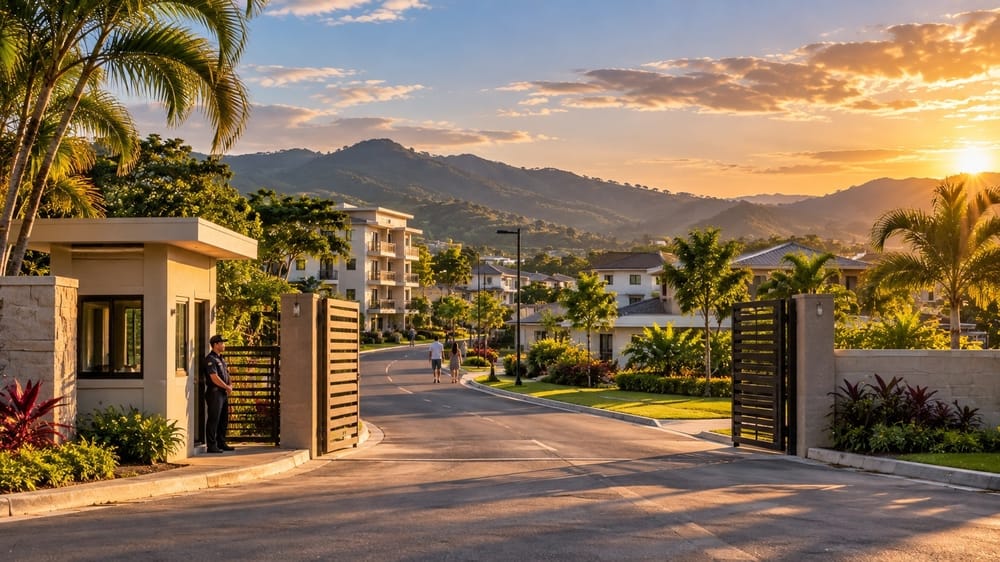
Ciudad Morazán has rules. Residents agree to restrictions on noise, pets, payments and conduct. Security enforces those rules, and residents who repeatedly violate their agreements can eventually lose the right to remain.
So what makes the governance voluntary?
During my recent visit, I spent more than an hour talking with Roberto, Morazán's head of security. His job puts him directly at the point where the idea of voluntary governance meets ordinary human behavior.
Roberto trains his officers to use restraint. During a serious confrontation at a bar that had been operating in a residential building, he chose to mediate rather than use force because no one's life was in danger. But restraint doesn't mean rules aren't enforced.
The more revealing example involved pets.
Residents are told Morazán's rules before signing their contracts. When someone repeatedly ignores them, security gives warnings and eventually refers the problem to administration. Roberto contrasted those residents with people who have lived peacefully in Morazán with pets for years.
Then he said something that captured the distinction: “Ultimately, you decide whether to live in Ciudad Morazán.”
That is the key to voluntary governance. It doesn't mean no rules, no authority or no enforcement. It means the governing relationship begins with disclosed terms and a choice.
I saw both sides of that choice during my visit. Suyapa, who runs Morazán's minimart, values the security, cleanliness and quiet enough to choose the community. Ursula's mother enjoys visiting but doesn't want to live there because she has numerous animals and doesn't want the obligations imposed by Morazán's pet rules.
Neither has to convince the other.
Morazán may be too young to prove whether voluntary governance can work at scale. But it demonstrates something the established cities I've examined cannot show nearly as clearly:
Consent doesn't require everyone to agree on how a community should be governed. It may allow different communities to offer different answers—and let people choose among them.
Read the full article on Free Cities

I am Joyce Brand, Governance Architect.
My work documents and maps the structural conditions that enable voluntary, contractual governance to deliver durable prosperity—observed in real zones like Ciudad Morazán, where aligned incentives have produced security, entrepreneurship, and community flourishing despite political hostility.
Just as personal resilience emerges from deliberate, aligned choices (reversing long-term health challenges through disciplined action), jurisdictional antifragility arises from substrates designed to withstand pressure.
These Insights chronicle observations, analyses, and lessons from the frontier of consent-based systems.
© 2025– The Morazan Model