
The Morazan Model
Governance Architect: Structural Design
for Voluntary Jurisdictions
Can You Build a Free City Without Political Autonomy?
Joyce Brand
Tuesday, November 24, 2026
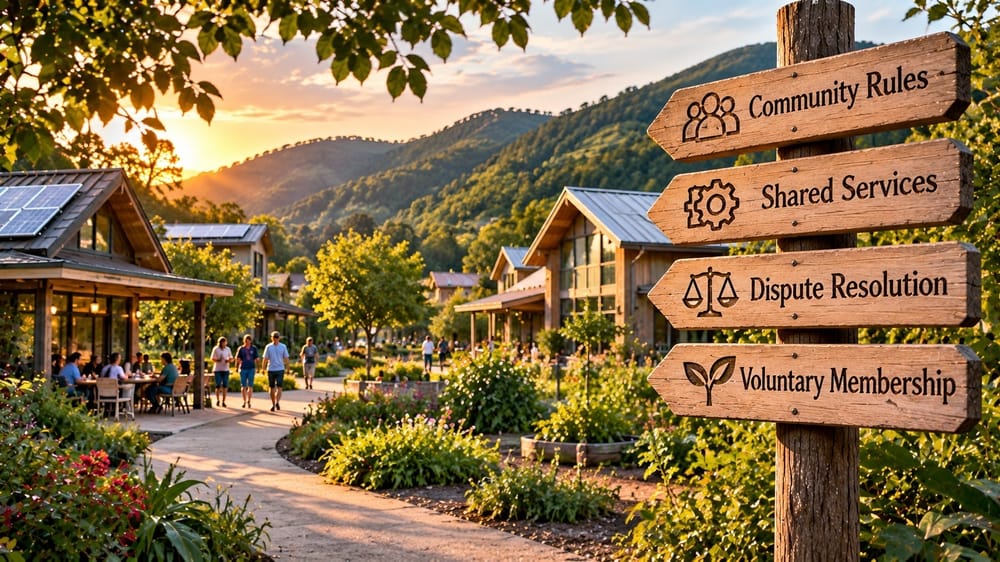
Suppose a group of entrepreneurs purchases land in the United States and builds a community with its own security, infrastructure, maintenance services, residency agreements, and dispute-resolution procedures.
Have they created a government?
The answer depends on what we mean by government. We usually associate governance with political authority, but many governing functions can be performed by private enterprises through property rights, contracts, and voluntary association.
Shopping malls, hotels, and retirement communities already provide services and enforce rules that resemble those of local governments. Spencer Heath recognized this possibility decades ago, proposing communities in which a landowning enterprise provides services because its success depends on attracting and retaining satisfied residents. His grandson, Spencer MacCallum, called these entrepreneurial communities entrecomms.
Unlike a conventional municipality, an entrecomm derives its authority from individual agreements rather than a general power to legislate. Residents choose the terms under which they participate, and the provider has an economic incentive to keep them satisfied.
For American intentional-community founders, this offers a practical alternative to seeking special jurisdiction status. A private community can provide security, maintain roads, manage shared infrastructure, establish contractual rules, and arrange dispute resolution without becoming a municipality.
But contractual governance has limits. Private agreements cannot override state or federal law, and owning land does not confer political sovereignty. Founders must distinguish the governing functions they can provide from the legal authority they do not possess.
My Consent Architecture Framework makes this distinction explicit. Strong internal contracts do not automatically provide legal autonomy from the surrounding government.
The opportunity is to begin with what can be built: land, enforceable agreements, useful services, and a business model that depends on voluntary participation.
A successful community can demonstrate whether people actually prefer governance delivered through contractual relationships. It may eventually seek greater autonomy—or discover that it can accomplish its objectives without it.
A private community does not have to become a government in the conventional sense to demonstrate a better way of governing.
Read the full article

I am Joyce Brand, Governance Architect.
My work documents and maps the structural conditions that enable voluntary, contractual governance to deliver durable prosperity—observed in real zones like Ciudad Morazán, where aligned incentives have produced security, entrepreneurship, and community flourishing despite political hostility.
Just as personal resilience emerges from deliberate, aligned choices (reversing long-term health challenges through disciplined action), jurisdictional antifragility arises from substrates designed to withstand pressure.
These Insights chronicle observations, analyses, and lessons from the frontier of consent-based systems.
© 2025– The Morazan Model